Thursday, July 26, 2018

Glenview Summer Art Fair : New Work

Unloading a new kiln of glazed pieces just in time for this weekend’s Glenview Summer Art Fair. Got some prepping, pricing & packing to do… and then you can come see some new work this Saturday & Sunday on the grounds of Lyons School in Glenview, Illinois from 11:00am-5:00pm.


from Gary Jackson: Fire When Ready Pottery https://ift.tt/2mM10cO

Fire, Forge & Feast.

Here’s a sneak peek at this week’s Summer Camp… we’re doing “Fire, Forge & Feast.” Where the kids are designing & producing their own thematic placesettings in clay & metal. These are a few of our combo utensil samples shown to inspire the kids!

Save


from Gary Jackson: Fire When Ready Pottery https://ift.tt/2A9XRNw

Worth It

Started out slow and a bit underwhelming…
but when the sun finally made its way through the clouds,
it was all worth the wait!!!


from Gary Jackson: Fire When Ready Pottery https://ift.tt/2Ol85hi

Wednesday, July 25, 2018

Velo Cult will close retail shop to focus solely on e-commerce

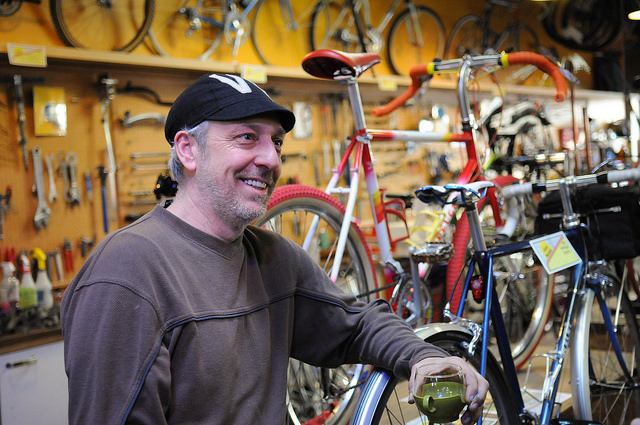
Velo Cult was a central meeting place for bike lovers of all types.
(Photos: Jonathan Maus)

Velo Cult owner Sky Boyer in February 2018.

Velo Cult — a bike shop, bar and community gathering and event space in the Hollywood Neighborhood — will throw one final party this Saturday. Owner Sky Boyer has decided to close the brick-and-mortar space to focus his efforts online.

Boyer moved his business from San Diego to Portland in 2012 and quickly became a major cog in the local bike scene. Velo Cult has hosted all types of events and meetings and the shop changed the bike retail landscape locally and nationally. In 2013, Outside Magazine named Velo Cult one of the top 10 bike shops in America.

In the end, it appears the complexities of running a brick-and-mortar retail and e-commerce business, mixed with requirements for running a bar in a 10,000 square-foot space, proved too big of a challenge.

“We’ve hosted weddings, funerals, concerts, poetry slams, musical jam sessions, parties to celebrate all occasions, and even got recognition on CNN, Travel Channel, and in numerous magazines,” said owner Sky Boyer in a statement. “With this big space we ran into problems with the bar in regards to the city, in the end the requirements from the city to keep the bar going are too great for a business like ours to take on. We don’t own the building so the expense for upgrades and the change to the layout does not make sense.”

Advertisement

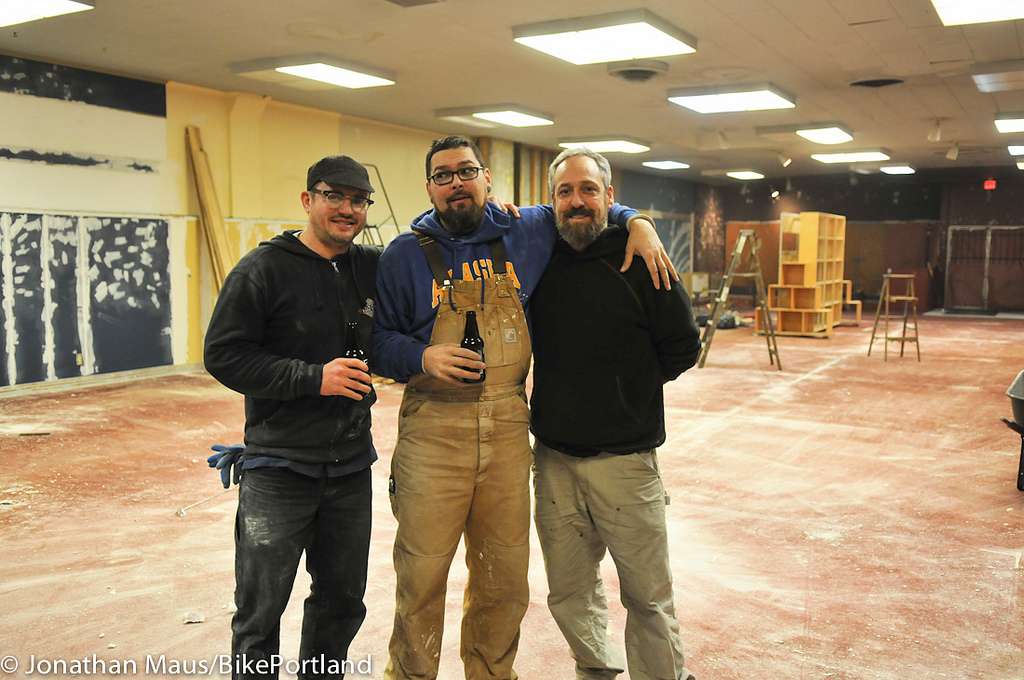
Sky Boyer and two employees renovating the 10,000 square-foot former antique mall in 2012.


In the past several years Velo Cult has found a robust niche for its line of branded apparel, frames, and other products.

As you might expect, Boyer plans to go out with a bang. There’s a big party planned at the shop for July 28th. Then on August 1st a liquidation sale will begin where everything — cool display items and merchandise included — must go.

Portland will sorely miss Velo Cult. Thank you Boyer Family for sharing this gift with us, and best of luck in the future!

For more information on the upcoming sale, follow Velo Cult on Instagram or visit them at VeloCult.com.

— Jonathan Maus: (503) 706-8804, @jonathan_maus on Twitter and jonathan@bikeportland.org

Never miss a story. Sign-up for the daily BP Headlines email.

BikePortland needs your support.

Portland Century August 19th

The post Velo Cult will close retail shop to focus solely on e-commerce appeared first on BikePortland.org.


from Latest headlines from BikePortland https://ift.tt/2LTxi0I

Chill reads for new urbanist needs

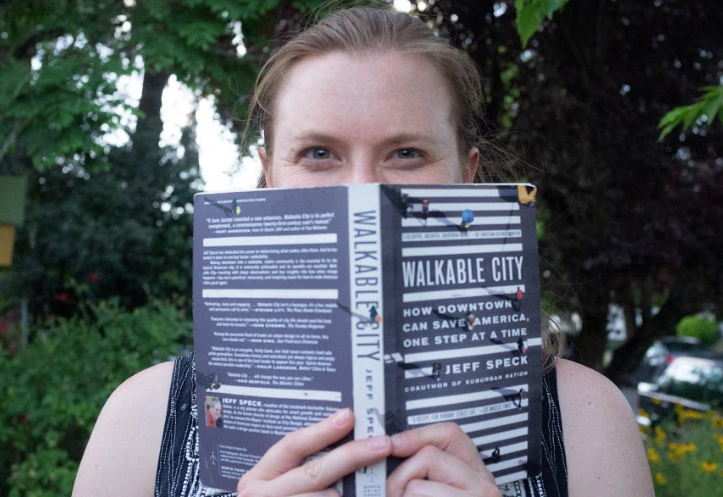
Our co-editor Emily Guise models proper reading form.
(Photo: Catie Gould)

This summer reading list was created by Catie Gould and Emily Guise, BikeLoud PDX volunteers and co-editors of our Adventures in Activism column.

Summer is a great time to relax by the pool (fountain, river, lake, sprinkler, or whatever) and still get nerdy about transportation and land-use. What could be better?

Here’s our list of favorite urbanist classics and a few newer ones for good measure…
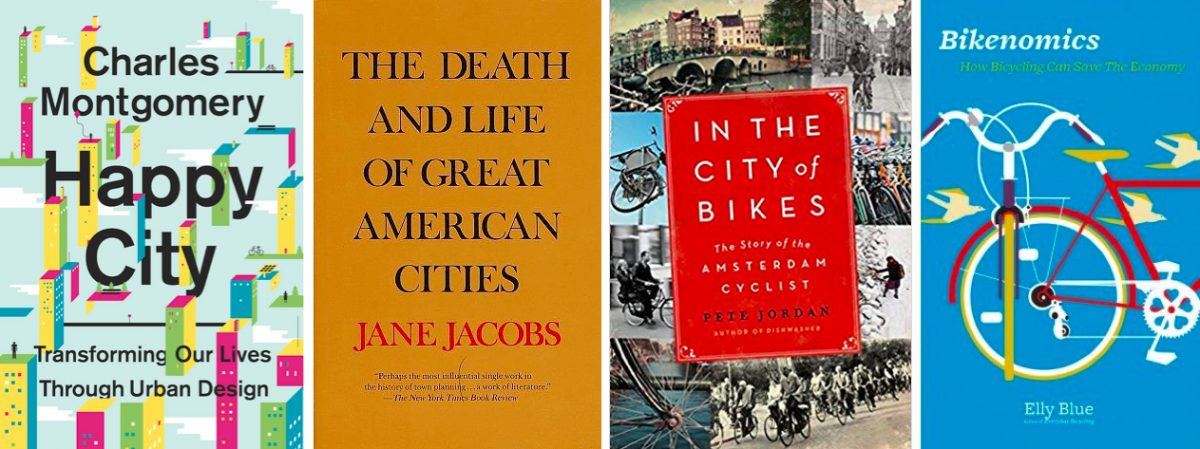
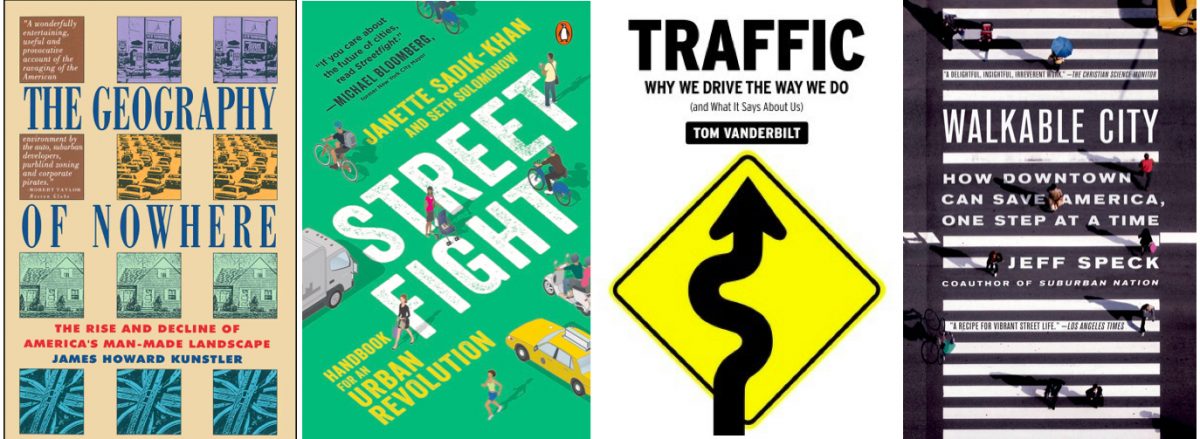
Geography of Nowhere, by James Howard Kunstler
Why are the suburbs so awful? Kunstler holds no punches, decrying cookie cutter strip malls and cartoon architecture as the “greatest misallocation of resources the world has ever known”. From the first American suburb to now, get a thorough history lesson on how things went so awry and envision how to restore civic life in these forsaken places. For a teaser, check out his fiery TED talk.

The Color of Law, by Richard Rothstein
From one development project to the next, the slow march through our historical segregation through official mortgage lending, zoning, and housing programs is going to change how you see your neighborhood forever. Which is a good thing, because it very likely has a racist history that still affects people today. Power through the feeling of being punched in the heart to the end where we look forward to what’s next for housing justice.

Street Fight, by Janette Sadik-Khan
Ted Wheeler asked in a recent Vision Zero briefing why New York City is making more progress than us. The answer is here: strong political leadership. Former NYC Transportation Commissioner Sadik-Khan walks us through her BetterBlock-style street transformation projects and dealing with the public backlash in the process. If you work at PBOT or City Hall, or criticize people who do, this is a must read.
Advertisement


Walkable City, by Jeff Speck
Walkers are an indicator species of a good street, and details matter a lot. Speck thoroughly examining every aspect of walkability, from one way vs two way streets, to parking pricing, to the ROI on street trees. Loaded with details, this book is not just an enjoyable read but a comprehensive guide for fixes to improve walkability that you’ll want to revisit again and again. Read with a pen handy.

Traffic: Why We Drive the Way We Do, by Tom Vanderbilt
A thorough look at the history, economics, psychology, and more of traffic and how this seemingly innocuous, mundane activity actually has huge implications for our mental and physical well-being, our wallets, and our economy. You won’t be able to think about traffic the same way after reading this one- especially the very compelling argument for the ‘late merge’ technique.

Bikenomics: How Bicycling Can Save the Economy, by Elly Blue
A concise argument in book form for why and how bicycling can kickstart local economies through boosting development and growth, and strengthen local communities by offering the freedom of a viable, non-car transportation option. Written by local bike luminary (and former BikePortland editor) Elly Blue.

The Death and Life of Great American Cities, by Jane Jacobs
One of the indispensable pillars of the new urbanist movements, Jacobs was a noted community organizer whose timeless observations of street life-her famous ‘sidewalk ballet’-are backed up by serious research and with an easy-to-read style courtesy of her journalistic background. This was her first book and it should be on every advocate’s shelf.

Happy City, by Charles Montgomery
Our physical environment shapes everything: From how much we trust our neighbors, to how many friends you have. What roles does architecture play? Or public transit? When our cities are at their best, so are their residents who live in them. Loaded with studies on the science of happiness and urban design examples, you’ll be sure to learn a lot of great facts sure to impress your non-transportation friends at parties.

In the City of Bikes: the Story of the Amsterdam Cyclist, by Pete Jordan
Former Portlander Jordan provides a fascinating look at cycling in the cyclists’ city, Amsterdam, from its beginnings in the 1890s, to the critical political street space protests and political action of the 1970s, to the continually evolving bike infrastructure of today.

Bleeding Albina: A History of Community Disinvestment, 1940-2000, by Karen J. Gibson
A sobering, but very necessary history of the Portland neighborhoods of inner North and Northeast. It explains how redlining, predatory lending, highway building, housing speculation borne of discrimination against Portland’s small Black community led a once thriving area to become a ghetto. It also examines how in the 1990s, low housing prices and neighborhood reinvestment opportunities quickly gentrified the neighborhoods while displacing long-time residents. A must read for anyone living in Portland.

— Catie Gould (@Citizen_Cate) and Emily Guise (@EGuise)

Never miss a story. Sign-up for the daily BP Headlines email.

BikePortland needs your support.

Portland Century August 19th

The post Chill reads for new urbanist needs appeared first on BikePortland.org.


from Latest headlines from BikePortland https://ift.tt/2OdOaR4

Let’s keep the Green Loop rolling

“Will the Green Loop have the bitterness of a bureaucrat’s utilitarianism and timeline, or will it be a place that embodies the slightly anarchistic spirit of Portland?”

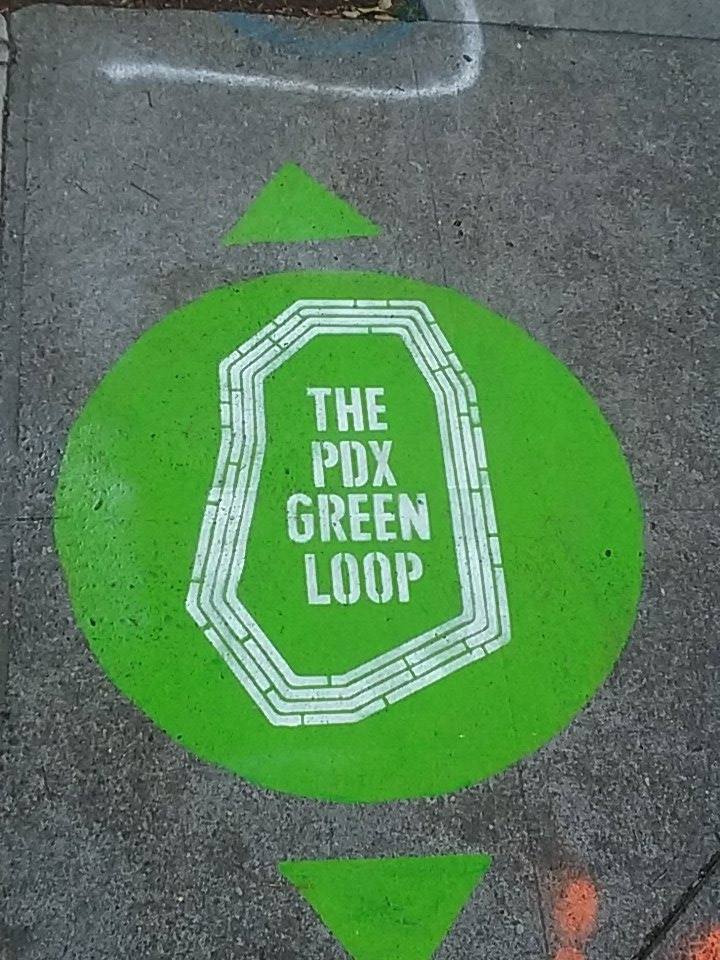
“What is the Green Loop”?

That’s the question I got asked the most while tabling for the Friends of the Green Loop at the last Sunday Parkway as thousands of people streamed by. I always responded, “It is this, but all the time.”

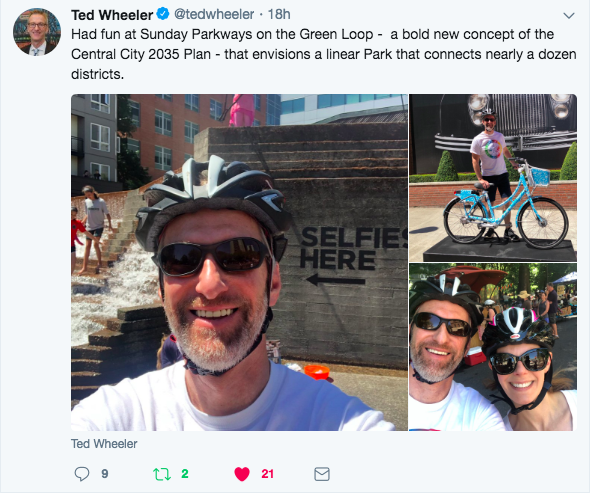
Connecting the downtown park blocks across the Broadway Bridge through the Lloyd and over the soon to be built I-84 crossing on 7th through the Central Eastside and finally looping over the Tilikum crossing. It is a connected loop for walking, biking, reflecting, and enjoying our city. This past Sunday, tens of thousands of Portlanders got a taste of what that feels like on the Green Loop edition of Sunday Parkways. For me, it was a quiet exploration of the city full of the diverse faces of my neighbors.

Over 40 years ago, atop the Hawthorne Bridge Governor Tom McCall, facing growing protests, made the decision to remove Harbor Drive and replace it with a gigantic park. This decision, along with a few others, cemented Portland’s place in the history of great things cities have done. It made the 28th largest city in the United States a leader in urbanism and a draw for progressive-minded people from around the country who realize there is a better way then sitting in traffic.

The vision of the Green Loop is no less ambitious then removing Harbor Drive.

Will the Green Loop have the bitterness of a bureaucrat’s utilitarianism and timeline, or will it be a place that embodies the slightly anarchistic spirit of Portland? How ambitious will it be at removing parking from the cold dead hands of 1950s thinking business groups? How will marginalized groups of Portland help shape it? That future is up to you.

Advertisement

The Friends of the Green Loop is a grass roots non-profit advocacy group aimed at answering those questions. You can add your name as a friend and join us at our Green Loop socials.

Yesterday PBOT hosted the first Green Loop bike ride and I’m hosting a Green Loop Social on August 1st. Come meet other Portlanders who believe that we can still do inspiring things!

Unfortunately, over the past few years our vision of how transportation should be used to connect us has been dominated by the Oregon Department of Transportation and their freeway expansions. It is time for us to offer an alternative vision. Sam Adams was the last elected official who understood the political force in Portland of visionary, non-automobile centric transportation projects. All those tens of thousands of people who enjoyed this past Sunday Parkway are ready to vote for leaders who articulate and deliver that vision.

Join the Friends of the Green Loop and let’s help make that vision a reality.

Portland Century August 19th

— Go By Bike (a.k.a. Kiel Johnson)

Get this post delivered directly to your inbox.

BikePortland needs your support.

The post Let’s keep the Green Loop rolling appeared first on BikePortland.org.


from Latest headlines from BikePortland https://ift.tt/2OcEVAG

3 Tips for Removing Pet Hair at Home

Pets are lovely creatures that bring limitless happiness into any home. But no matter how much you love your furbaby, it’s normal to feel frustrated because of the amount of hair they shed. Good thing there’s a number of solutions available. Here are some:

3 Tips for Removing Pet Hair at HomePhoto by Gulyás Bianka on Unsplash

Adhere to a regular cleaning schedule

A regular and thorough vacuuming is the best way to remove pet hair from your home. Start high and work low, using proper attachments to run the vacuum over walls, into corners and over draperies and window sills. Static electricity and low humidity in a home can help pet hair cling to surfaces. Running a humidifier is good for you and makes breathing easier, skin feel more hydrated and it helps keep tufts of loose pet hair from clinging to surfaces. If you have a pet, keep a schedule of regular vacuuming to maintain a home free of pet hair. Source: SheKnows

Use a squeegee

You can also use a dry rubber squeegee or rubber broom to lift up any pet hair from carpets. It might freak you out slightly and cause slight rage at your vacuum (why is it missing so much?!), but man, does it ever work. Just “rake” an area with the tool in short, fast strokes and you’ll see hair peeling up off the carpet. Source: CleanMySpace

Don’t forget to groom your pet

Don’t duck your grooming responsibilities; embrace them. Giving your dog or cat a quick one-minute brushing outdoors or in the garage every day will save time and effort spent dusting, sweeping and vacuuming every week. With a little hair off the dog (or cat) at a time and place of your choosing, you’ll soon see a reduction in the number of fur bombs you find around the house.

Bonus: Your cat won’t hack up as many hairballs for you to step on before you’re fully awake in the morning. Source: VetStreet

Don’t be afraid to let your pets roam around inside your carpeted home. If ever your carpet needs deep cleaning or repair, you can always call us. We’ll have it sorted for you in no time!

The post 3 Tips for Removing Pet Hair at Home appeared first on Curlys Carpet Repair.


from Curlys Carpet Repair https://ift.tt/2NKVsLj